


TLDR: Q2 multifamily activity, leasing seasonality, and portfolio updates!
Taylor Bend has continued to consume most of Tack’s new deal focus over the past few months, but there are some interesting broader market trends in Q2.
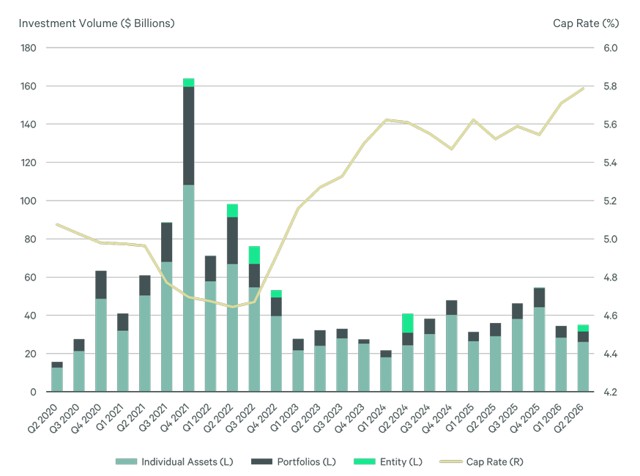
According to CBRE, multifamily sales volume fell 2.7% year-over-year in Q2 and was roughly flat from Q1 to Q2. Transaction volume over the trailing four quarters is still up 11%, but this growth will start falling unless volume picks up in Q3. This may be challenging due to the increase in treasury yields that occurred in Q2.
Interestingly, the average multifamily cap rate increased 26bps to 5.8%, which is now ~100bps higher than the 2022 lows. This results in a ~19% decrease in property values, all things being equal, and highlights the pressure that some owners of 2021 – 2022 purchases are facing with little interest rate relief in sight.
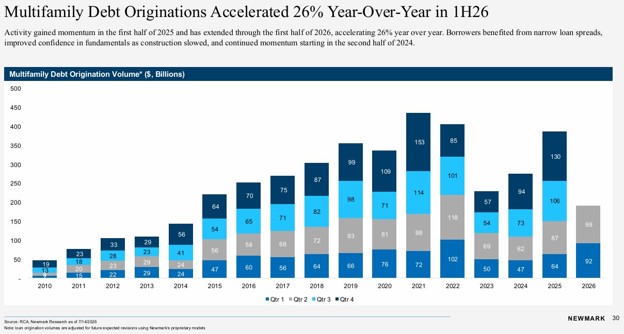
Relatedly, multifamily debt originations in the first half of 2026 grew 26% year-over-year, which implies that significant refinancing activity is occurring. Debt remains abundant (but expensive), so many owners are refinancing rather than selling given the cap rate dynamics mentioned above. While equity values at many properties today may be impaired, there has yet to be a catalyst for widespread forced sales, and the availability of debt allows owners to refinance rather than realize a poor exit.
Historically, spring and summer have been the peak leasing seasons in multifamily. Students are graduating, the weather is more favorable, and there are not the distractions of the holidays.
This influences property operations as it is ideal to lease during months of high demand compared to those with slow leasing activity.
However, over the past few years, leasing demand has flattened with a smaller peak occurring in Q1. There is a persistent impact from increased turnover during COVID and new supply provides more flexibility to renters.
It is also important to pay attention to local dynamics as each market can vary. For example, google search trends are an easy way to approximate local leasing seasonality. Regardless, it is universally suboptimal to head into the holidays with significant vacancy. (Source)
The Gardens at Manchester signed a lease on its last remaining vacant commercial space, which results in commercial space revenue that is ~70% higher than at acquisition (>150% higher considering one of the original tenants rarely paid rent). It is also rewarding to bring vibrancy to the neighborhood with high-quality tenants compared to vacant storefronts.
1710 Lofts currently has elevated vacancy due to a concentration of leases that ended in July/August, but we have ramped up marketing to drive leasing activity. The good news about lease concentration is that meaningful marketing investments can be foregone for most of the year when few leases expire at one time.
The Hopewell Historic portfolio is about to begin leasing its first vacant unit. Renovations are underway in Danville but are moving slowly due to permitting delays with the City of Danville. Several units should be available in the next two weeks..
– Tucker Thompson